Budget 2021 –Analysis by Ron McKinnon, MP What is in Budget 2021 for Seniors?
What is in Budget 2021 for Seniors?
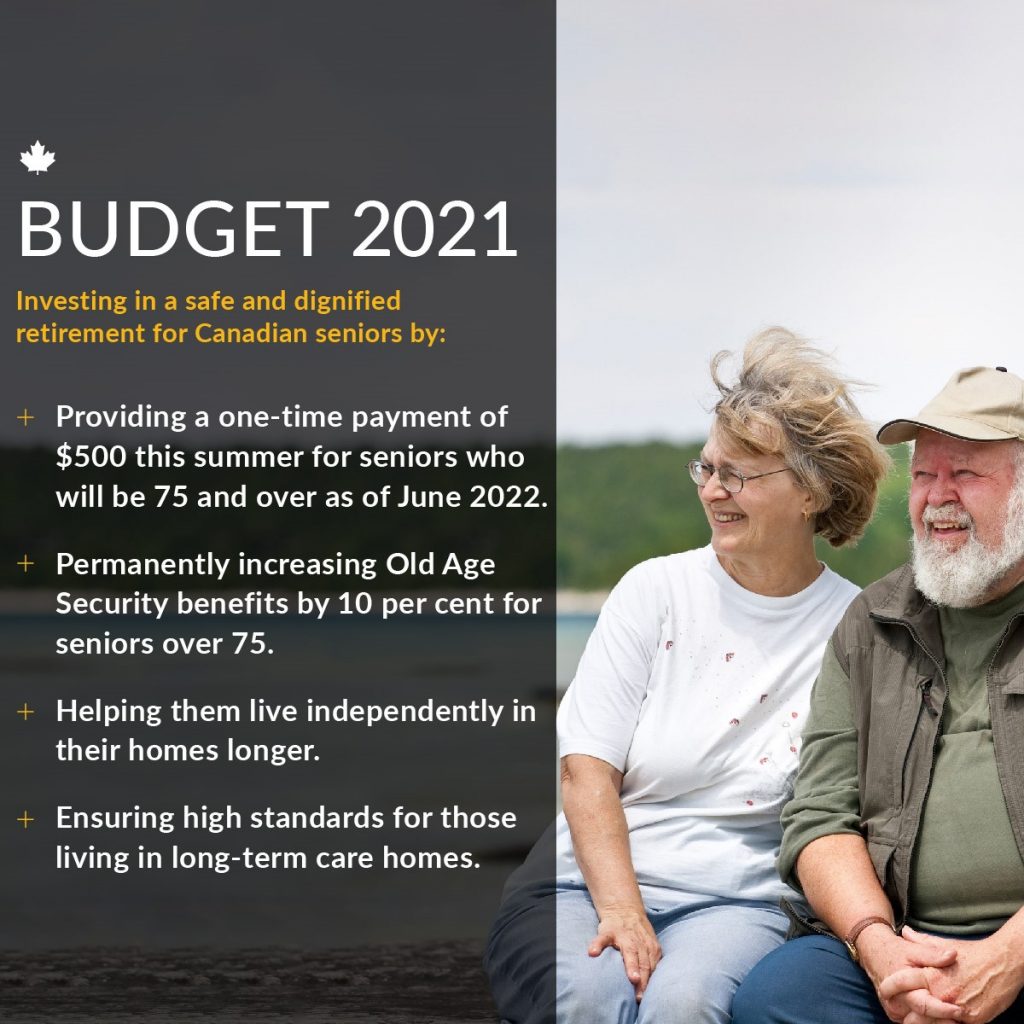
Increasing Old Age Security for Canadians 75 and Over
During the pandemic, many seniors have faced economic challenges as they took on extra costs to stay safe. Additionally, many seniors are living longer and relying on monthly benefits to afford retirement. After a lifetime of hard work, they deserve a secure and dignified retirement. That is why the government is committed to increasing Old Age Security (OAS) benefits for seniors age 75 and older.
The government plans to implement this commitment in two steps.
- Budget 2021 proposes to meet the immediate needs of this group of seniors by providing a one-time payment of $500 in August 2021 to OAS pensioners who will be 75 or over as of June 2022.
- Budget 2021 then proposes introducing legislation to increase regular OAS payments for pensioners 75 and over by 10 percent on an ongoing basis as of July 2022. That would increase the benefits for approximately 3.3 million seniors, providing additional benefits of $766 to full pensioners in the first year and indexing inflation going forward. Thiat would give seniors more financial security later in life, particularly when they face increased care expenses and a greater risk of running out of savings.
Strengthening Long-term Care and Supportive Care
The pandemic has shone a light on systemic issues affecting long-term care facilities across the country. The government welcomes the news that the Heath Standards Organization and Canadian Standards Association are launching a process to help address those issues in Canada. The Health Standards Organization’s and Canadian Standards Association’s work with governments, stakeholders, and Canadians to develop national standards will help inform our ongoing discussions with provinces and territories on improving the quality of life of seniors in long-term care.
To protect seniors across Canada and build on this work:
- Budget 2021 proposes to provide $3 billion over five years, starting in 2022-23, to Health Canada to support provinces and territories in ensuring standards for long-term care are applied, and permanent changes are made. To keep seniors safe and improve their quality of life, the federal government will work collaboratively with provinces and territories while respecting their jurisdiction over health care, including long-term care. This work would ensure seniors and those in care live in safe and dignified conditions.
- Budget 2021 proposes to provide $41.3 million over six years, and $7.7 million ongoing, starting in 2021-22, for Statistics Canada to improve data infrastructure and data collection on supportive care, primary care, and pharmaceuticals.
Helping Seniors Age Well at Home
After a lifetime of hard work, seniors want to live healthy, safe, and independent lives. Seniors want to stay at home, in the communities that support them, for as long as possible. But that can become difficult as they age. That leads to many vulnerable seniors transitioning to supportive care before they would otherwise need to if they were better supported at home. To look at new ways to keep seniors in their homes for longer:
- Budget 2021 proposes to provide $90 million over three years, starting in 2021-22, to Employment and Social Development Canada to launch the Age Well at Home initiative. Age Well at Home would assist community-based organizations n providing practical support that helps low-income, and otherwise vulnerable seniors age in place, such as matching seniors with volunteers who can help with meal preparations, home maintenance, daily errands, yard work, and transportation. This initiative would also support regional and national projects that help expand services that have already demonstrated results in assisting seniors in staying in their homes. For example, knowledge hubs can help seniors access the local services available to them or provide information, resources, and training to community-based organizations delivering practical supports to seniors.
Improving Access to the Disability Tax Credit
In 2017, the Government of Canada reinstated the Canada Revenue Agency’s Disability Advisory Committee to ensure tax measures for persons with disabilities are administered in a fair, transparent, and accessible way. Since the release of the committee’s first annual report in 2019, the government has introduced many significant changes, including improvements to its communications and outreach activities for the Disability Tax Credit and changes to Registered Disability Savings Plans to protect beneficiaries better. As the government considers new recommendations from the committee, released in a second report on April 9, 2021, the government is proposing to take further steps to act on the committee’s guidance by improving the eligibility criteria for mental functions and life-sustaining therapy. To help more families and people living with disabilities access the Disability Tax Credit and other related support measures like the Registered Disability Savings Plan and the Child Disability Benefit:
- Budget 2021 proposes to update the list of mental functions of everyday life that is used for assessment for the Disability Tax Credit. Using terms that are more clinically relevant would make it easier to be assessed, reduce delays, and improve access to benefits.
- Budget 2021 also proposes recognizing more activities in determining time spent on life-sustaining therapy and reducing the minimum required frequency of therapy to qualify for the Disability Tax Credit. To ensure these changes enable applicants to have a fair and proper assessment of their eligibility for the Disability Tax Credit, the government will review these changes in 2023.
Better Palliative Care
To provide Canadians, including those who live in long-term care and their families, with better palliative and end-of-life care, including culturally sensitive care:
Budget 2021 proposes to provide $29.8 million over six years, starting in 2021-22, to Health Canada to advance the government’s palliative care strategy and lay a better foundation for coordinated action on long-term and supportive care needs, improving access to quality palliative care. Initiatives could include: raising awareness of the importance of palliative care; providing public education on grief; improving palliative care skills and supports for health care providers, families, caregivers, and communities; enhancing data collection and research; and improving access to culturally sensitive palliative and end-of-life care.
To read the Budget 2021 speech or to review the budget documents, please visit https://www.canada.ca/en/department-finance/services/publications/federal-budget.html
 X
X